
How to Make Homemade Pizza Dough (Crispy Base, Chewy Crust)

There’s something deeply satisfying about making pizza dough from scratch. The smell of yeast, the feel of soft dough under your hands, and that first bite of a crisp yet chewy crust — it’s the foundation of truly great homemade pizza. Yet for many home cooks, pizza dough feels intimidating or unpredictable. Too sticky, too tough, or lacking flavour are common frustrations.
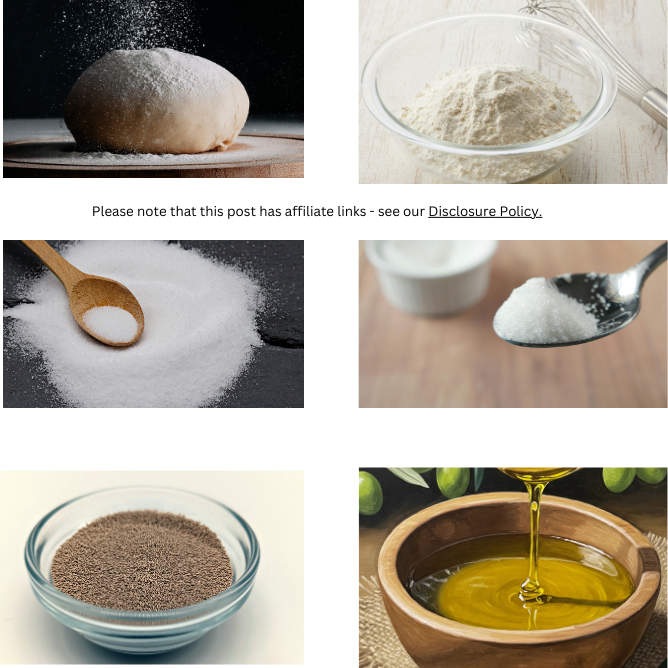
This RecipeFeasts homemade pizza dough recipe is designed to remove the guesswork. It uses simple pantry ingredients, clear measurements, and proven techniques to help you achieve consistent results every time. Whether you’re baking in a standard home oven, on a pizza stone, or in an outdoor pizza oven, this dough adapts beautifully.
We’ll walk you through the science behind yeast activation, why hydration matters, and how resting time transforms both flavour and texture. You’ll also learn how to tweak the dough depending on whether you prefer a thinner, crisp base or a thicker, airy crust.
If you’ve ever wondered why restaurant pizza tastes better, the secret is often the dough — and with this guide, you’ll be able to recreate that quality at home with confidence.

Recommended Ingredients & Tools
Key Ingredients (Why They Matter)
- Strong Bread Flour: Higher protein creates elasticity and chew
- Yeast: Responsible for rise and flavour development
- Olive Oil: Adds tenderness and subtle richness
- Salt: Enhances flavour and controls yeast activity
Recommended Tools
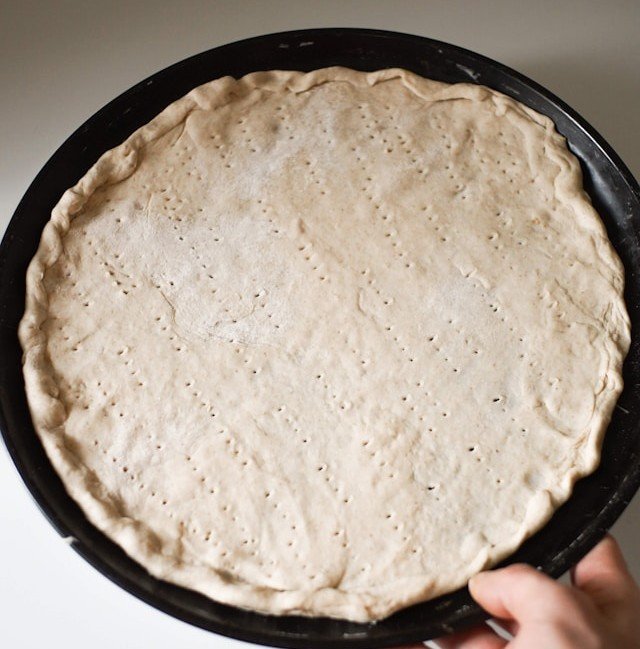
If you don’t have a pizza pan, use a regular baking sheet on the pan. Grease it with olive oil and sprinkle with cornmeal as directed within the instructions section and then press the dough into your desired shape that will fit. Ensure the dough is about 1/2-inch thick but if you prefer a thinner pizza, stretch the dough out a bit more.

How to Make Homemade Pizza Dough (Crispy Base, Chewy Crust)
Ingredients
Method
- Mix flour, yeast, and salt in a large bowl.
- Add warm water and olive oil, stirring until shaggy.
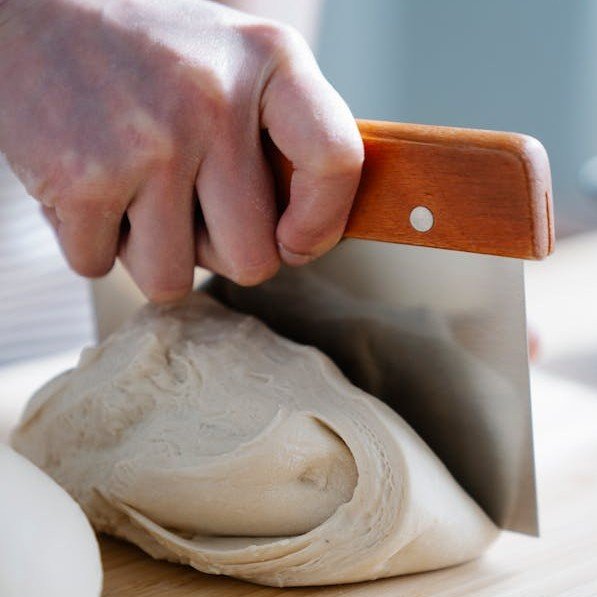
- Knead for 8–10 minutes until smooth and elastic. It's recommended that you use your hands to knead, however, there nothing wrong if you prefer to use your hand-held or stand mixer.
- Place dough into a greased mixing bowl, cover tightly, and set aside to rise for about 1½ hours or if you are not in a hurry, the dough can be left overnight in the fridge.
- Punch down risen dough to release air bubbles. Divide in 2. Roll dough out into a 12-inch circle. Cover and rest as you prep the pizza toppings
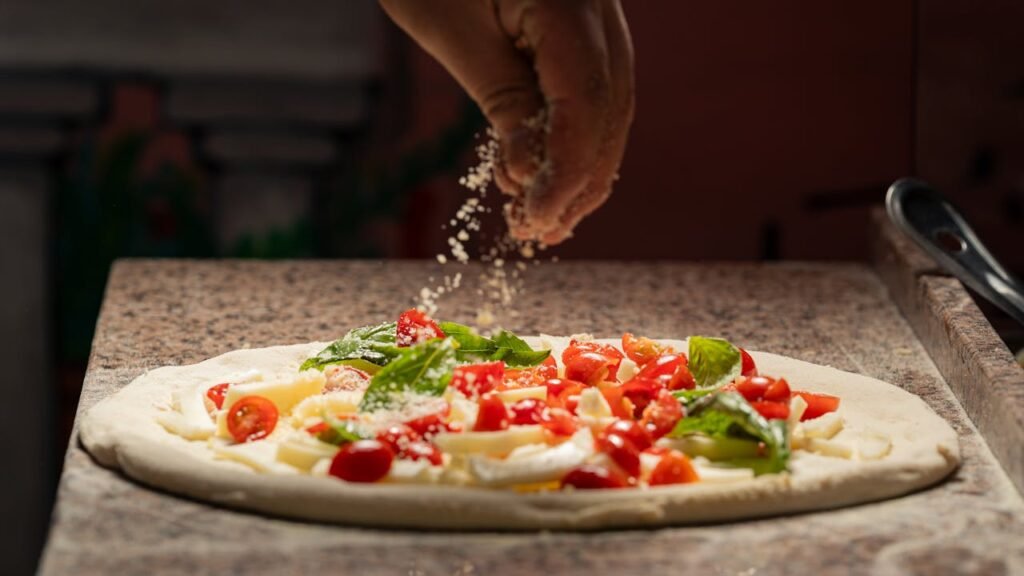
- Top with favourite pizza toppings.
- Bake pizza at a very high temperature for only about 15 minutes.
Notes
Kitchen Tips, Science & Variations
Ingredient Science
Warm water activates yeast, but water that’s too hot can kill it. Aim for lukewarm — warm to the touch, not hot. Bread flour absorbs more water than plain flour, which is why hydration levels matter.Texture & Flavour Control
- Crispier Base: Lower hydration and longer bake
- Chewier Crust: Higher hydration and longer rest
-
More Flavour: Cold‑ferment dough in the fridge for 24 hours
Variations
- Whole wheat: Replace 25% of the flour
- Garlic dough: Add ½ tsp garlic powder
-
Herb dough: Mix dried oregano or basil into the flour
Storage & Freezing
Room Temperature: Use within 24 hours. Refrigeration: Store covered dough for up to 3 days. Freezing: Freeze dough balls for up to 3 months. Thaw overnight in the fridge.
FAQ (For Featured Snippets)
Why is my pizza dough tough?
Over‑kneading or too much flour can make dough stiff. Can I make pizza dough without a mixer?
Yes, this dough works perfectly with hand kneading. Do I need a pizza stone?
No, but it improves heat transfer and crispness.
You May Also Like
- Easy Homemade Pizza Sauce
- No‑Knead Flatbread Recipe
- Garlic Bread Knots